
When analyzing my “journey to health,” I began to realize that there was much more to it than nutrition and exercise. Nutrition and exercise are critical and essential to achieving optimal health, but there is a huge psychological component. The power of habit, goal setting and motivation (the why?) are all central to successfully designing your life in a way that will help you become healthy.
“Motivation is what gets you started. Habit is what keeps you going.” – Jim Ryun on Quora
“Champions don’t do extraordinary things. They do ordinary things, but they do them without thinking, too fast for the other team to react. They follow the habits they’ve learned.” – Unknown
In this post, I will be addressing the Power of Habit and will discuss goal setting and motivation in other sections.
It is estimated by various people that 40-70% of what an individual does each day is out of habit. Think about your daily routine and habits. People wake up, or not, possibly hitting their snooze button. They shower, brush their teeth and get dressed. They look out the window at the weather. Next comes checking their phone for messages and or scrolling through their social feeds, playing Worldle and looking at their financial accounts. Of course this is often accompanied by a coffee, something to eat and so on. The wallet goes in the pocket or the purse is picked up and they keys accompany the trip to the car. The drive to work happens. Listening to the radio or music or continuing to drink coffee. We arrive at work, enter our place of work. We eat lunch, communicate with colleagues. Drive home and then the evening unfolds. Of course this is different for everybody as our routines vary, but you get the picture. So much of what we do is out of habit.
When I think of what the word, “habit” means to me is that it is something I do without thinking. It is something that I am not making a conscious decision about doing, but I just do it out of habit. Unfortunately, some habits are not constructive or positive and conversely, others pay great benefits. As we practice our habits daily, their impact compounds, much like interest in a bank account and the positive or negative effects are amplified.
So, what does that have to do with achieving optimal health? If you can construct your daily habits in a way that assists you in exercising and having the appropriate nutritional intake without thinking about it, the results will follow.
“The chains of habit are too weak to be felt until they are too strong to be broken.” – Samuel Johnson on Quora
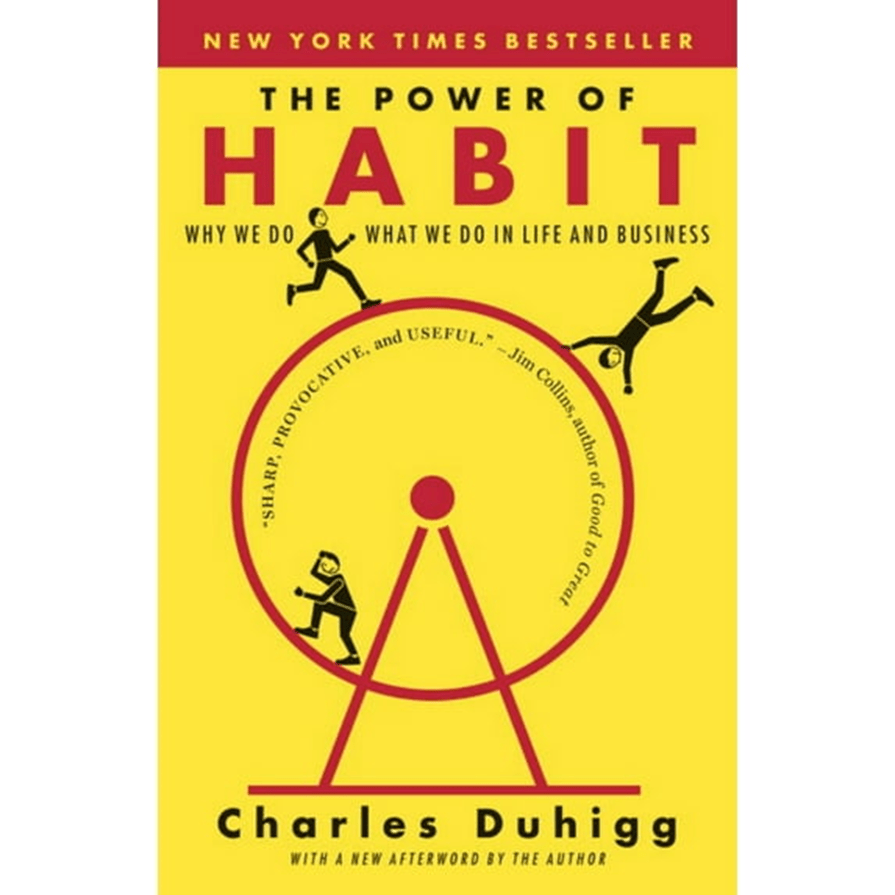
The Power of Habit by Charles Duhigg explains that habits are formed through a three-step “habit loop”: a cue that triggers the brain, a routine that is the behavior itself, and a reward that reinforces the loop. The book argues that understanding this loop is the key to changing habits, using real-world examples from individuals, organizations, and societies. The core principle for change is to keep the same cue and reward while replacing the routine—a method the book calls the “golden rule” of habit change.
The habit loop
- Cue: A trigger that tells your brain to go into automatic mode and which habit to use. For example, a cue could be feeling bored or sitting down at the kitchen table for breakfast.
- Routine: The physical, mental, or emotional behavior that follows the cue. It can be as simple as grabbing a cookie or as complex as a morning workout.
- Reward: The positive reinforcement that helps your brain figure out if the loop is worth remembering for the future. This can be a physical feeling, like the taste of coffee, or an emotional one, such as a sense of accomplishment.
How to change a habit
- Identify the loop: Figure out the specific cue, routine, and reward that make up your habit.
- Implement the golden rule: Once the loop is understood, keep the same cue and provide the same reward, but substitute a new routine in between. For instance, if the cue is feeling stressed (cue), and the routine is eating a sugary snack (routine) to feel better (reward), you could replace the routine with a short walk or a phone call to a friend to achieve a similar reward.
- Believe in the change: Duhigg emphasizes that a belief in the possibility of change is crucial, especially when facing difficult habits like alcoholism.
In trying to apply this information in a practical way, I will share my personal experience. Fortunately, exercise has been a habit for me for decades. I have always exercised. It has never been a choice. I just do it. Pretty much every day. The exercises that I have done have varied over time, often dictated by where I live, injuries I have or what time I have for exercising, but I have always exercised. The few times that I have broken my habit of exercise, I have noticed that it becomes more of a decision and that makes it more difficult, but I can’t think of a single time that I ever regretted exercising. I always feel better for it.
For me, it has been critical to find a time of day and activities that I could do consistently. Often this has meant waking up very early. Waking up early in itself can be challenging the first handful of times, but then it also becomes a habit. When I lived in the Middle East I would wake up around 4:45 AM and take long walks along the water before returning to the exercise room in our apartment building and/or swimming in the pool available. This became my favorite time of day. I enjoyed having quiet time to myself, thinking about the day coming and getting in a great workout before most people’s day started. For others, it may work better after work or at lunch time and so on.
Above I mentioned a “cue” that triggers behavior. For me, the cue is waking up. Either by alarm or before the alarm. As soon as that happens my routine begins. I prepare for the morning the night before by doing simple things that will make my morning “habits” happen even more easily. I have my stovetop coffee pot full and ready to brew. I have my protein bar and espresso beans in a container by my favorite chair. My vitamins are in their container. I have Metamucil, green power powder and Turmeric-ginger powder prepared and covered in a glass in which I just have to add water. My gym shorts and a shirt are nearby. I wake up, put on my clothes, go down the stairs, mix my drink, take my vitamins and turn on the coffee. Then my exercise routine begins as the coffee brews. When the coffee is finished, I interrupt my exercise. I sit down in my favorite chair in front of the fireplace to drink my coffee and eat my protein bar. At that time I take care of any demands that have come through on my phone, any communications I need to take care of and enjoy surveying the state of the world (I may be sarcastic at this point) and any financial accounts I need to assess. When I complete that activity, I do the second half of my exercise routine before my children wake up. Once I wake up the kids and get them started on their day, I finish any other portion of my exercise routine. At 8 AM, I take the kids to school and then go directly to Little Mountain Park, where I do my daily hike. If it is a day that I plan to swim, I have packed my towel and swimsuit in the car the night before. I have to admit that swimming is not a habit for me at this point, but more of a choice and as a result I am inconsistent in that area. By about 10 AM, my morning exercise at home and my hike are complete.
The above routine is my habit. It is not something I have to think about. It just happens.
My nutritional intake is an area that I did not have what I would consider positive habits, so I had to look at everything I consumed and figure out what to keep and what to change. I realized that my four tablespoons of honey and protein drink in my coffee were not a good thing. I switched to black coffee. Initially, this seemed odd, but soon it became a habit. I don’t even think about it now. I will discuss the rule of 3s to help understand how long it takes for behaviors to become habitual.
I ate so many things that were not good for me and I did so absolutely without thinking about it. I ate chips everyday. Lots of cheese, lots of sauces and mayonnaise. Many glasses of juice daily. Milk. The list is long. I was not eating many vegetables, fruits nor nuts and seeds. Vegetables and fruits always seemed difficult to prepare, but I soon learned that it wasn’t as difficult as I thought.
I soon enjoyed purchasing the fruits and vegetables and typically prepared them to last for several days. Chopping up and steaming vegetables. Cutting up fruits and storing them in containers.. Bags of nuts and seeds in the pantry.
Once I started this routine, I enjoyed the process and the taste of the food so much that I realized I had never enjoyed eating so much. I am never hungry, eat more than I used to, yet have lost a lot of weight. Remarkable.
When I think back about other periods in my life in which I had more destructive routines such as eating sweets late at night, large amounts of chips, drinking alcohol or even smoking when I was younger, I do remember how it was difficult to alter those behaviors. If you do practice such behaviors, think about what the cue is for you. Is it when you walk in the door after work? Is it when you sit down after work? Does the cigarette or the glass of wine or whisky happen then? If so, think of what you can replace it with at that specific time. Once you have done that a few times, you will replace your old habit with a new one.
The “3-3-3 rule for habits” suggests that it takes 3 days to overcome the initial challenge, 3 weeks to make a habit a routine, and 3 months to integrate it into your lifestyle. By focusing on achieving these milestones, you can build momentum and make a new habit feel easier to maintain over time.
While I have not thought about the 3-3-3 rule for myself, I think it rings true in my experience, so I have included it here to be of help. Good behaviors and less positive behaviors become habit after done for a while. You can do it!
How the 3-3-3 rule works
- First 3 days:
This is the initial and often most challenging phase. By consistently performing the habit for three consecutive days, you establish a new pattern.
- First 3 weeks:
After the initial three days, consistency is crucial. Reaching the three-week mark helps the habit become a regular routine, making it easier to adhere to without as much conscious effort.
- First 3 months:
This longer-term goal helps solidify the habit. By the three-month mark, the new behavior is likely to become a deeply integrated part of your routine and a permanent lifestyle change.
Tips for using the 3-3-3 rule
- Focus on the next milestone:
If you slip up, don’t get discouraged. Just reset and focus on achieving the next “three days” of consistency.
- Break it down:
The rule breaks the habit-forming process into manageable, short-term goals, which can help you stay motivated.
- Be prepared for challenges:
Remember that the second and third stages can still be difficult, but keep pushing through the resistance to see the benefits accumulate.
In my next entries I will discuss the power and technique of goal setting and the importance of motivation.
 Jim's Travel Culture and History Blog
5 thoughts on “My Journey to Health – The Power of Habit”