
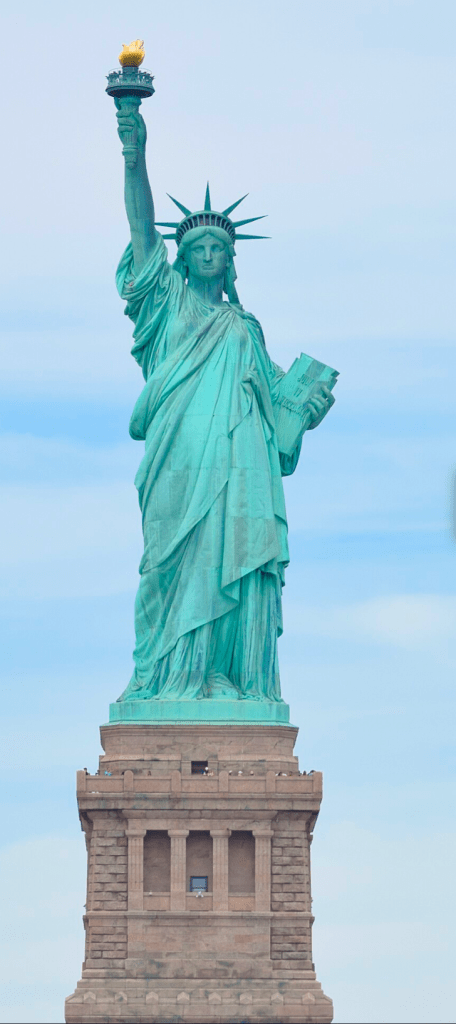
Our Story of Immigration to the USA
Economic Impact of Immigration
Where are immigrants coming from
I will share our experience and at a later time, I will share advice regarding the process.
My wife and I were married in the Dominican Republic in December of 2011. She was a citizen of the Dominican Republic and I a citizen of the USA.
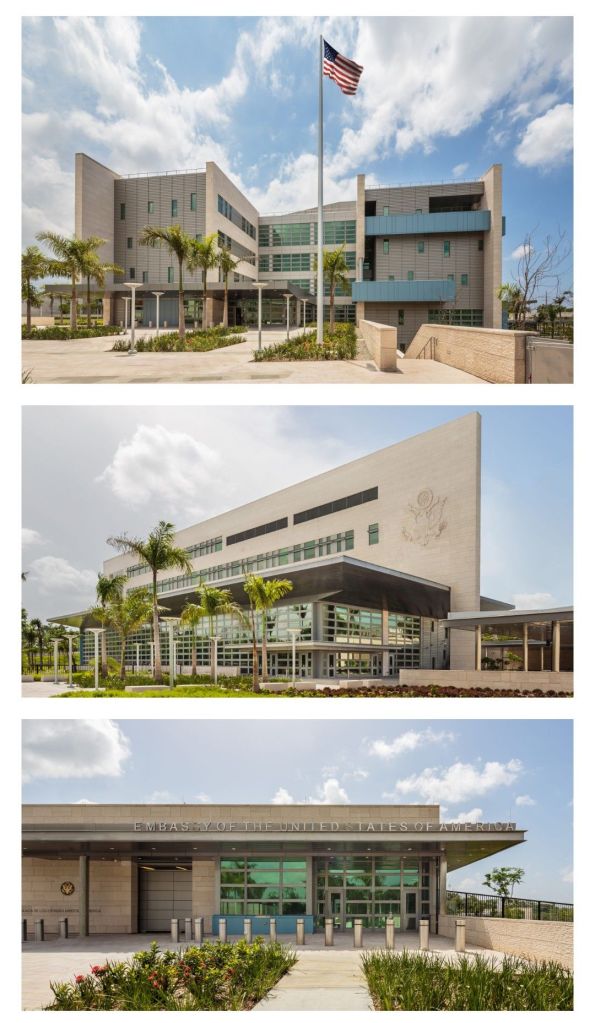
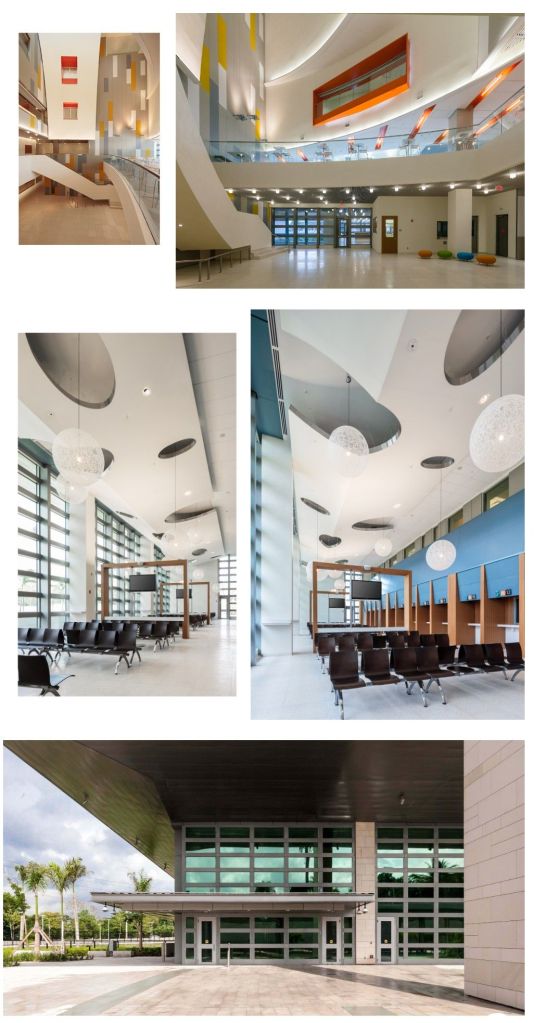
She joined me in Doha, Qatar and then we lived in the United Arab Emirates for almost eight years, finally departing in March of 2020.
While living in Abu Dhabi, we decided to apply for her immigration to the USA. We didn’t know what our future held and wanted to be prepared if we needed to move back to the USA. It was 2014 and we applied for her to immigrate to the USA as my wife.
When doing so, one has to apply via a form referred to as I-130, which I will include a link to. It is quite a long form with many details. The initial step in the immigration process is to determine if the relationship is indeed valid. Evidence such as birth certificates, marriage certificates and so on are necessary. These are typically translated to English.
Some people, who are living in the USA together (an example would be an international student getting married in the USA), would apply for what is called “adjustment of status,” adjusting from a student visa to a resident status (often referred to as a green card). This is called the I-485 form. We did not go that route, so I am less familiar with that. We had thought of moving to the USA with a tourist visa for my wife and then applying for adjustment of status, but that can be construed as fraud, and she would lose the ability to ever enter the USA again. We decided against that for obvious reasons, but many people go that route successfully.

Eventually, in about six months or so as I recall, our application was approved. At the time it cost around $450.00 and we did it without legal assistance. We were happy living in the Middle East and decided not to go to the next step. In fact, during this first submission, I used my parent’s address as the mail address, as I didn’t have a mailing address in the UAE. I later learned that they considered that address to mean I was living in the USA. To move the application to another office in the USA it was going to cost us several hundred more dollars and many months. One of those things you learn in such processes. Anyway, we did not follow through at that time.
We continued to live in the United Arab Emirates (UAE) in Abu Dhabi and my wife gave birth to our amazing twins in March of 2018.
In 2019, we made the decision to retire and move to the Dominican Republic in 2020. That move became slightly messy (which I will detail elsewhere) due to my residency application there, but we did move in March of 2020 as the twins turned two and Covid had set in.
In July of 2020, we learned that our son was autistic. We then began to try to decide what would be best for him and our future. The resources were limited for autism in the Dominican Republic (DR), but we did not decide to apply for immigration to the USA until July of 2021, if my memory serves me well.
So, the process began. This time, I decided it would be best to enlist the help of a lawyer to avoid any small paperwork errors that would cost us precious time and money, as time is of the essence when seeking therapy for young autistic children.
I interviewed approximately five different lawyers remotely. The cost for the immigration process of entering the USA (not all the way to citizenship) via a green card ranged from just over $2,000.00 to $6,000.00. I could do all the work myself but wanted another set of eyes on the documents. Basically, they tell you the information you need to provide, you do all the work, and they double-check it and give you guidance in the steps of the process. We ended up choosing someone located in Pittsburgh. They were very responsive and empathetic when interviewing them, but a little less so once the process started.
I already knew all the documents we needed and those that needed translation. Birth certificates for my wife, children and I, marriage certificates, divorce decrees, passports and more. All need to be certified as official and translated if necessary.
The I-130 form is not super complicated, but it is more than 10 pages, which provides many opportunities to make small errors. One must include all the addresses where you have lived, data on all family members including parents, work and educational experiences and many more questions. As we filled out the form and provided all the documents, we were continuously sending the documents to the lawyer. At times, they were slower to respond than I would have liked as for us, time was of the essence. We wanted to get our son to the therapy provided in the USA as quickly as possible.
The I-130 step of the process is primarily to determine the validity of your marital or familial relationship. We had been married about 10 years and had two children. We also had been approved in 2014, which I think helped us get through this first hurdle relatively quickly. Normally it takes at least a few months, but we sailed through in a little over a month.
During this process, I was in touch with multiple Facebook groups in which this was the primary focus. I cannot emphasize enough how supportive and instructive these groups were. They had very experienced moderators that would provide answers to all sorts of questions. Unfortunately, by sharing everybody’s experiences you learned that the process was not consistent, not fair and certainly not equitable. You can say that it is only my opinion, but I am sure the data bears this out. Each country is dealt with so differently. People with identical situations are treated differently and so on.
Most people going through this process are in a situation in which the person petitioning for their spouse to immigrate is living in the USA and their spouse living in another country. That is how it works. The pain of separation for these families is real and dramatic. I would have to say cruel. It is an unnecessary hardship. We chose for both of us to remain outside the country as we couldn’t imagine being apart. Many people must remain in the USA to demonstrate that they have a residence to come to, an income and so on. This proves that the person immigrating will not be a financial burden to the country. We were able to demonstrate this via other means.
Once the relationship is determined to be valid, the application gets sent to the National Visa Center (NVC). At that stage, you must fill out a very lengthy form, the DS-260. You must also provide extensive evidence of your financial assets. My family in the USA wrote letters indicating we had a place to stay in the USA. This stage took longer. Often more documents are requested. We had a huge notebook of every document you can possibly imagine. They need to know any time you have ever been in the USA and for how long. There are multiple pages of questions asking you about political affiliations, crimes you may have committed, etcetera. You of course must provide police reports from any country in which you have lived.
After the first step, I thought this would go quickly, but it crawled. People applying from the Dominican Republic were taking up to two years at that time. If my wife were European or Canadian, it would take much less time. Draw your own conclusions about those differences.
One strategy that can be employed is requesting an expedited visa process based on humanitarian needs, health problems and so on. There is no flow chart to indicate which scenarios will be accepted.
This is where the process gets very subjective and discriminatory. Online in Facebook groups, some people with very serious and valid reasons to have their process expedited were getting rejected and some from other countries with very weak cases were getting the expedited request approved. I dug into this deeply. Studying everything I could about the process and discussing with many people.
My lawyer told me that expedited requests rarely get approved, but I didn’t accept that. I thought that with my son being diagnosed as autistic, we could make a very solid case.
I wrote a request for it to be expedited and it was rejected. You can appeal and/or request and expedited process again, so I did. Again, I was rejected. My lawyer was not helpful and would have charged me a bunch of money to write a request that she didn’t believe would work. So, I dug deeper.
I wrote my representatives back in the State of Washington and my senators as well. By doing that, they will investigate the case for you. There is also a sort of ombudsman for each embassy that you can contact with complaints. I did all of these and more than once.
I then called the National Visa Center with my case number. It was over an hour waiting to reach somebody, but I was determined to get through to a human. When I finally did, I was going to keep them on the line as long as possible. I established a friendly rapport with the person at the NVC. What I learned was very disturbing. I asked her about the process and my requests for expedition. Apparently, the request goes to one individual in the embassy in the country where you are residing. The Dominican Republic in our case. There is no set of firm rules that dictate their decision. So, one individual in the embassy gets to subjectively decide whether our case is expedited or not. The employee of the NVC told me it would all depend on whether that person had a good day or not. It was left up to the mood of this one individual. I kept talking with her because I was shocked that she would reveal that.
It seems ripe for racial discrimination and of course lawsuits. So, I investigated lawsuits and learned that there are tremendous number of lawsuits filed against the NVC and often times they just fold because they know they are vulnerable.
So, once again, I wrote a letter requesting that my wife’s case be expedited. This time I included the health concerns for our son, the financial aspect of maintaining households in two countries and I also explained what I had learned about the process. I shared this with my representatives and senators, letting them know how appalled I was with the process being so susceptible to discriminatory behavior. My wife is black and I am white, so it is entirely possible that the one individual in the embassy might not approve of such relationships. In my opinion, these decisions should be made by a committee that follows very detailed policies and procedures. In all the requests I included a letter from the pediatric psychiatrist that diagnosed Robert as autistic and I had translated it as well.
I am not sure which of the pressure points I applied worked, but the final request was granted.
I would never have known this except for the fact that I was making phone calls because I hadn’t heard anything. The NVC told me, “Didn’t you know you had an interview scheduled on such and such a date?” Nobody had contacted me and problematically, we had to have extensive medical exams and biometric appointments before the interview. They had not sent me any notification. Beware, you must track everything persistently.
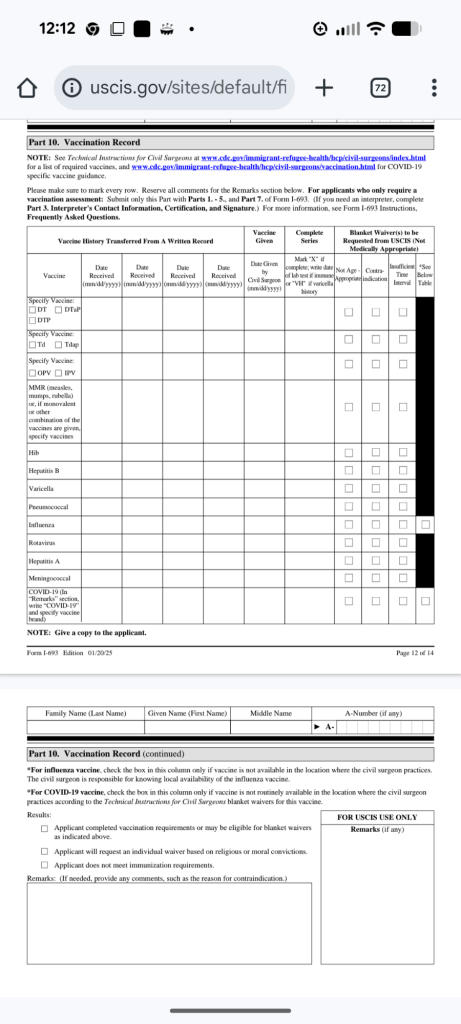
I was able to scramble our schedule and dash off to the capital for the biometric appointment and the medical exams. The medical exam day was painful. Denny, my wife, was in a building for most of the day and I wandered around shady looking streets for hours. I tried to sleep in a nearby church. The heat was sweltering. It all went ok and then we had to appear for the interview. Denny’s parents stayed overnight with us in the capital to watch the kids, so that Denny and I could go to the embassy for the interview.
We had a massive accordion folder with every kind of document you can imagine. We had prepared for every possible question and/or paper request. When we were called to the window it was rather anticlimactic. They asked very few questions. One thing they asked about was her travel through the USA and I had brought an I-94 form that details every time you have passed in and out of the USA. That was not a form our lawyer told us to bring, but I decided to bring it anyway. Do your own research, follow your instincts and cover every scenario you can think of. You can’t over prepare.
We sailed through the interview, and they took her passport. We were told the passport would be sent to an office in our town, Bavaro, with the necessary permissions to enter the USA. If we did not pick it up within ten days of notification it would be returned to the embassy, and the process would start again. This would give us the dates by which we had to enter the USA to register Denny as a permanent resident in the USA. The residency would be for 10 years.
Unfortunately, they never notified us. After a while, I called a lady at the embassy to find out when we would be notified. She said we had been notified almost 10 days earlier. They hadn’t notified us and I panicked as I knew it would derail the process if we hadn’t picked it up within 10 days. We raced to the local Jumbo store where the office was located and fortunately the passport and permission to enter the USA was still there.
At that point we were completely stressed out. Surprise after surprise. Not pleasant and the USA visa process takes no responsibility for their errors. We needed to then decide when we would depart the Dominican Republic for the USA. We needed to book flights, sell our house, our car and move our belongings to Denny’s house across the country. It was chaotic.
We chose the date of March 15, 2022, about eight months after our initial application. It was much faster than we anticipated, and I am quite sure the requests for expedition and the pressure applied must have been instrumental in making it happen.
However, the journey is never over. We still needed to exit the DR and enter the USA. The agents in the USA can reject you for just about anything….even a hunch it seems, so we were still quite anxious.
We requested assistance at the airport in Miami based on Robert’s autism and my bad back (which was legitimate at the time). That was a great move. It helped us navigate the airport and locate the office that we had to pass through to make it official.
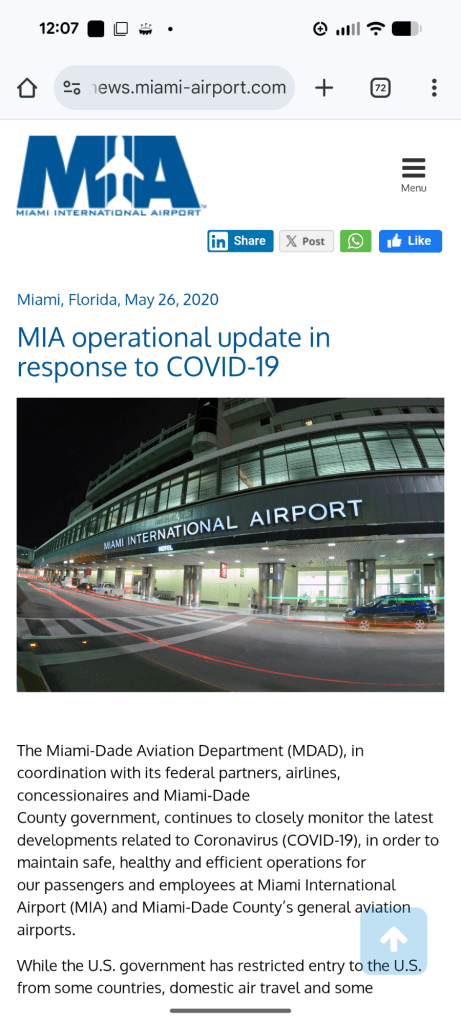
Ironically, when exiting the Dominican Republic, we ran into problems. Fortunately, I have always carried our marriage certificates, the children’s birth certificates and so on. The lady at the airport did not believe that we were a legitimate couple or that I was the legitimate father of our children. Possibly due to the age difference between me and my wife, possibly just to be difficult. It seemed to be the latter. We had to go to another office to work through that issue. I was furious and so tired of surprises in the process. Eventually we made it through and got onto the plane.
In Miami, the people who wheeled us through the airport were very helpful and we got everything stamped and approved as needed and we were on our way to the State of Washington.
Only three more years until Denny could apply for Citizenship. I will cover that in another post.
Some advice for those interested in immigrating to the USA:


- Be sure you are fully committed to doing it and understand the implications. For example, once a US citizen, you will have to file taxes no matter where you are living in the world. Only a couple of countries do this. One of the others is Eritrea.
- Read about the process at the USCIS web site so that you are highly familiar with the process, the timeline, the documents required and so on.
- Collect all the documents you need early so that you don’t waste time during the process. Some of the documents take longer for you to obtain (e.g. police reports from other countries, birth certificates, etc…)
- Calculate how much the process will cost. Include all of the costs (application fees, translation fees, medical fees, lawyer fees, etc..}
- Translate all documents that need to be translated and make sure you follow the guidance on who can translate the documents.
- Consider hiring an immigration lawyer to help you through the process. If you go that route, I encourage you to interview at least five and have many questions ready for them. You will learn a lot about the process from them even if you don’t hire them and you will see that there is a wide range of price tags.
- Join groups on Facebook related to immigration. There are several excellent groups on Facebook. Search of I-130 or I-485 groups depending on your route of immigration. I found this immensely helpful and you meet some interesting, empathetic people.
- Be your own best advocate. Research everything. Nobody is more interested in your case than you. You need to double check whatever a lawyer or official tells you. If there is a disagreement, let them know and dig into the issue further to make sure it is understood.
- Over prepare in the area of documentation. Even if you are told you don’t need to bring certain documents to the interview, bring them anyway.
- Be sure all your data is accurate and that everything is spelled correctly. Get dates, addresses, names correct.
- Be patient, but hurry. Make sure you take time to do every step correctly, but don’t put things off. Have your information ready and submit it as soon as possible if you want things to happen in a timely manner.
- Locate all of the online resources so that you can find answers for yourself.
- Know your case number and know how to follow the progress of your case.
- If you have the time, file for immigration when there is an immigrant friendly administration in office. Some administration reduce the number of workers in the area of immigration, raise prices and create more obstacles for immigrants, which makes your application take much longer, cost more and have a lower possibility of being successful. Unfortunately, that is reality.
- Create as many joint bank accounts as possible, utility accounts, rental or home contracts with both of your names on it to provide more evidence that your relationship is legitimate.
That is a “starter” list of some things to think about.
Best wishes 😊
 Jim's Travel Culture and History Blog
Jim, Reading your story of dealing with the US Embassy, NVC, and filing numerous forms brought back many unpleasant memories of my time doing this not once but twice! The first time was in 1983 in Bangkok, Thailand. We were married in the USA in 1982 but had not yet applied for her “green card”. She had been in the US on a F1 student visa so had been there legally. In all it took us about six weeks to get her green card issued. There were still heaps of paperwork to be submitted. This was before the internet, mobile phones, and other electronic devices we take for granted now. Many times, we would get a phone call from the embassy at 8:30am telling us that we needed to be at the embassy at 2:00pm for an appointment that afternoon. It was like that for many weeks. As we were both students at the time, neither of us had a whole lot of money. My Dad was a big help in this as he kept pressuring our local state representatives and congressmen. My wife’s family was pretty well off and also had a lot of political connections within the Thai government. Their assistance also helped in getting her background “validated” for the US government. About 10 years later when I was living in Bangkok and knew a few people who worked in the embassy, one guy who worked in this section told me his sole job was basically to deny all visa applications. After my first wife passed away from brain cancer, I remarried a few years later to another Thai. She was an accountant and owned her own home and had saved up quite a bit of money. All things that the US government is interested in. Due to her job in Bangkok, she travelled internationally quite a bit, but it was only to other Asian countries. She applied for and was granted a 10-year visa to the US based on all of the documentation that she submitted. We ended up getting married about three months after she arrived. We then started the process as you outlined in your Immigration story. The big difference is that she was already here in the US which really helps. Yes, it is kind of a gray area that the US immigration doesn’t like but it is not illegal. I’ve known quite a few others that have gone this route. Had I gone the official route and apply in her country, it could have easily taken 9-18 months or more to accomplish this. I think the visa is called a K-1 (fiance visa). Anyway, it took about seven months for her to get her actual green card. During that time, she was granted a visa that allowed her to work. I’ve never hired an immigration lawyer to assist in this. It seemed that I would have to do all the work anyways. At this time, facebook was still kind of new and not a lot of groups yet. It would have been nice to hear what other people had been doing. Cheers and Happy Thanksgiving! Jay
LikeLiked by 1 person
It does bring back stressful memories. Nice to know that someone else can relate. I can’t imagine doing it all without the Internet and relatively easy communication. Crazy about the guy whose job was to deny visas. It’s so bizarre that one individual can make those kinds of decisions. I am glad it all worked out for you. Happy Thanksgiving to you as well!
LikeLike